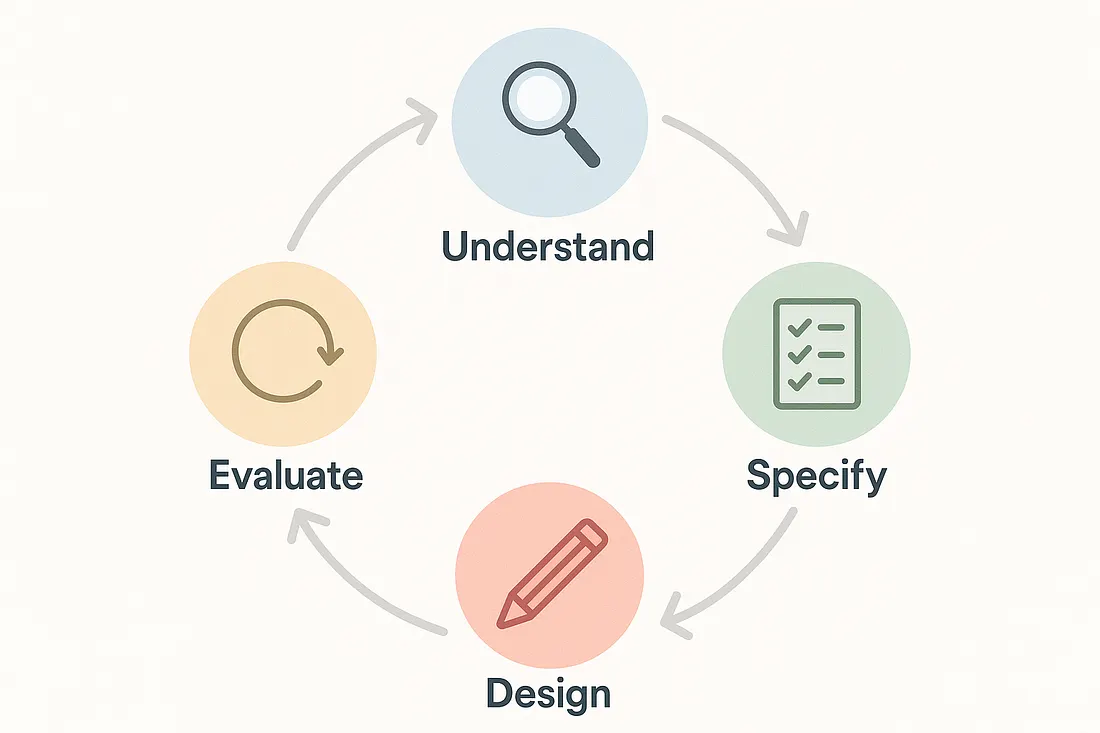
Let’s break it down👇
What is Design Thinking?
It’s a human-centered approach to problem-solving. It helps teams focus on real user needs, not just business goals or assumptions.
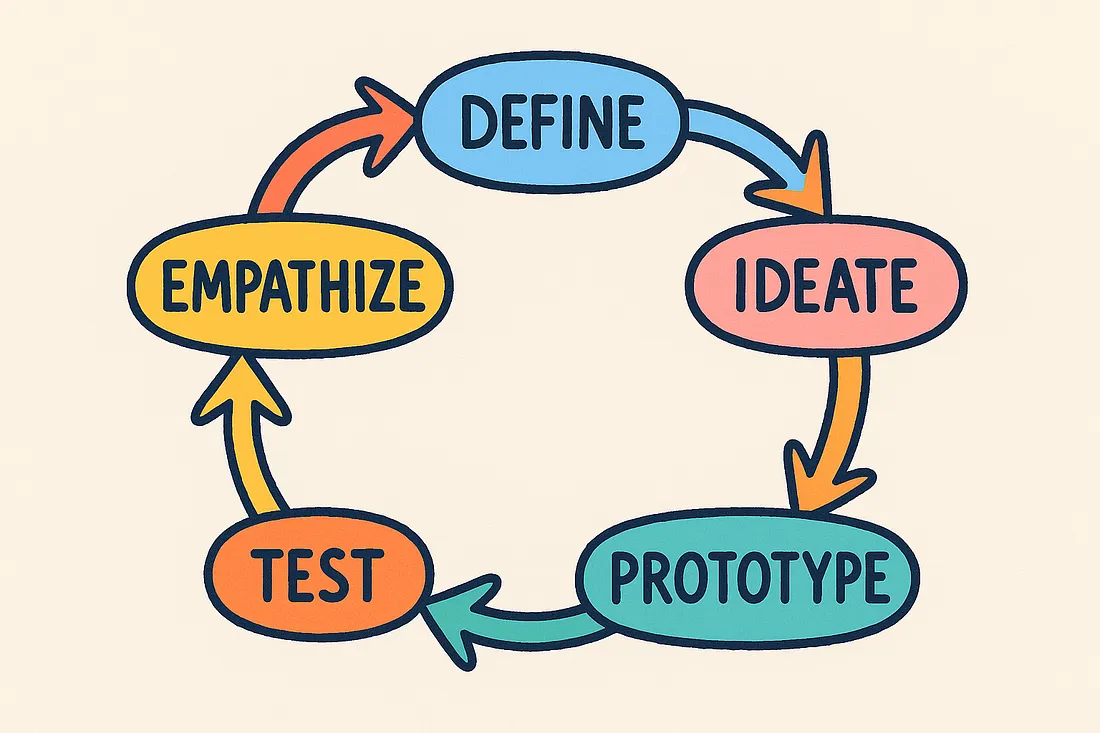
The 5 Phases of Design Thinking
1. Empathize
Before creating anything, first understand the user — their pain points, desires, behaviors.
Talk to real users
Observe their actions
Collect stories, not just data
Goal: Step into their shoes.
2. Define
Take all your research and narrow it down to the core problem.
Example of a problem statement:
“College students need a better way to manage their daily tasks because current apps feel too complex.”
3. Ideate
This is where creativity kicks in. No idea is too silly.
Brainstorm multiple solutions
Encourage wild ideas
Sketch rough concepts
Goal: Find fresh, unexpected solutions.
4. Prototype
Turn your ideas into tangible drafts — wireframes, models, clickable prototypes. It doesn’t need to be perfect, just testable.

5. Test
Share your prototype with real users. Watch them use it. Learn from their feedback, improve, and repeat.
Reminder: Testing is not a one-time event. It’s a loop.
Core Principles of Design Thinking
To make Design Thinking work, these principles are key:
User-Centric: Solve real problems for real people.
Bias to Action: Start doing instead of over-planning.
Collaboration: Work across disciplines — designers, developers, marketers.
Embrace Failure: Every failed idea brings you closer to the right one.
Iterate, Iterate, Iterate: There’s always room for improvement.
Conclusion
Design Thinking isn’t just a process; it’s a shift in mindset. When you focus on users first and iterate often, better solutions happen naturally.