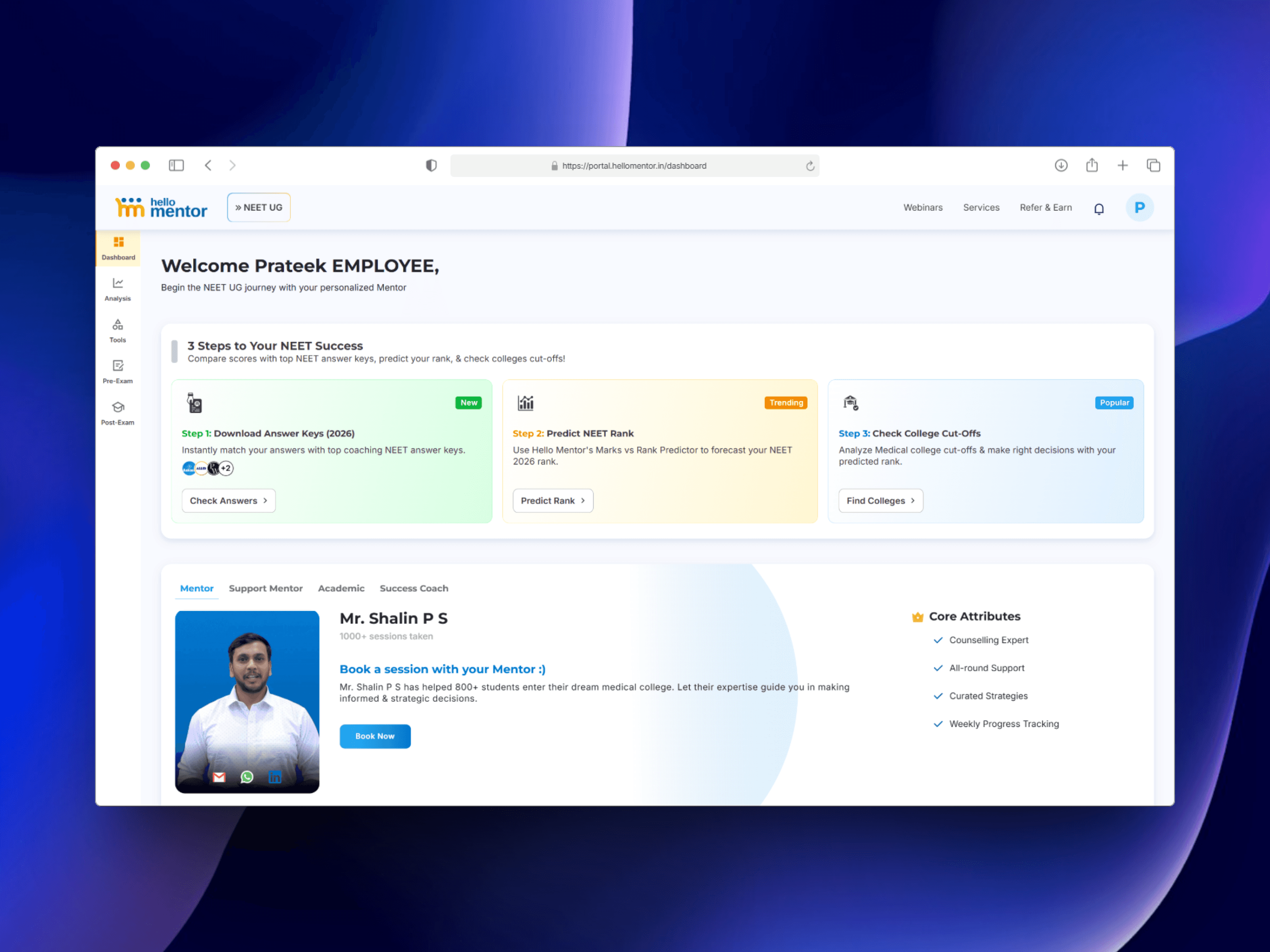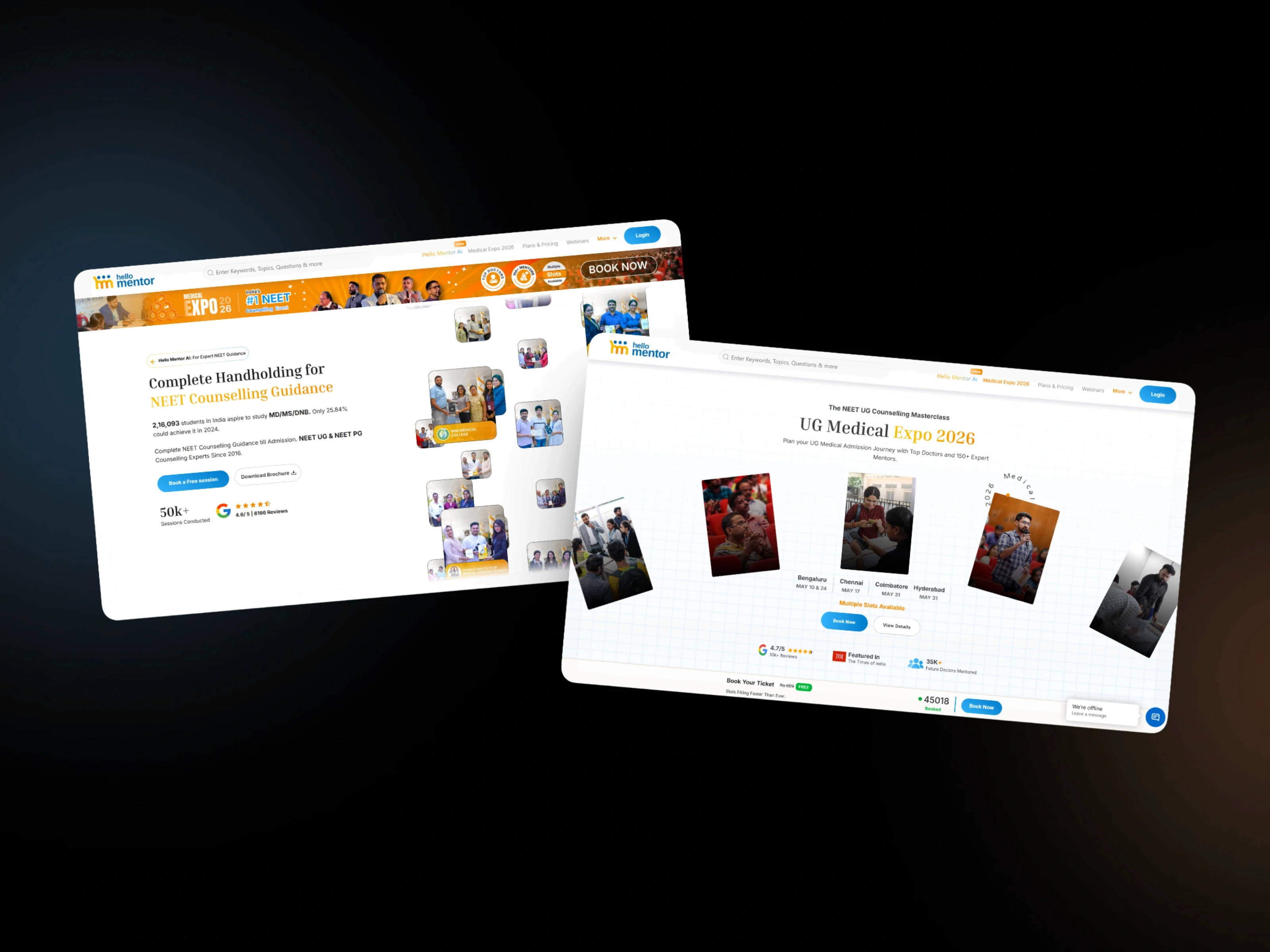
From Ambiguity to Authority
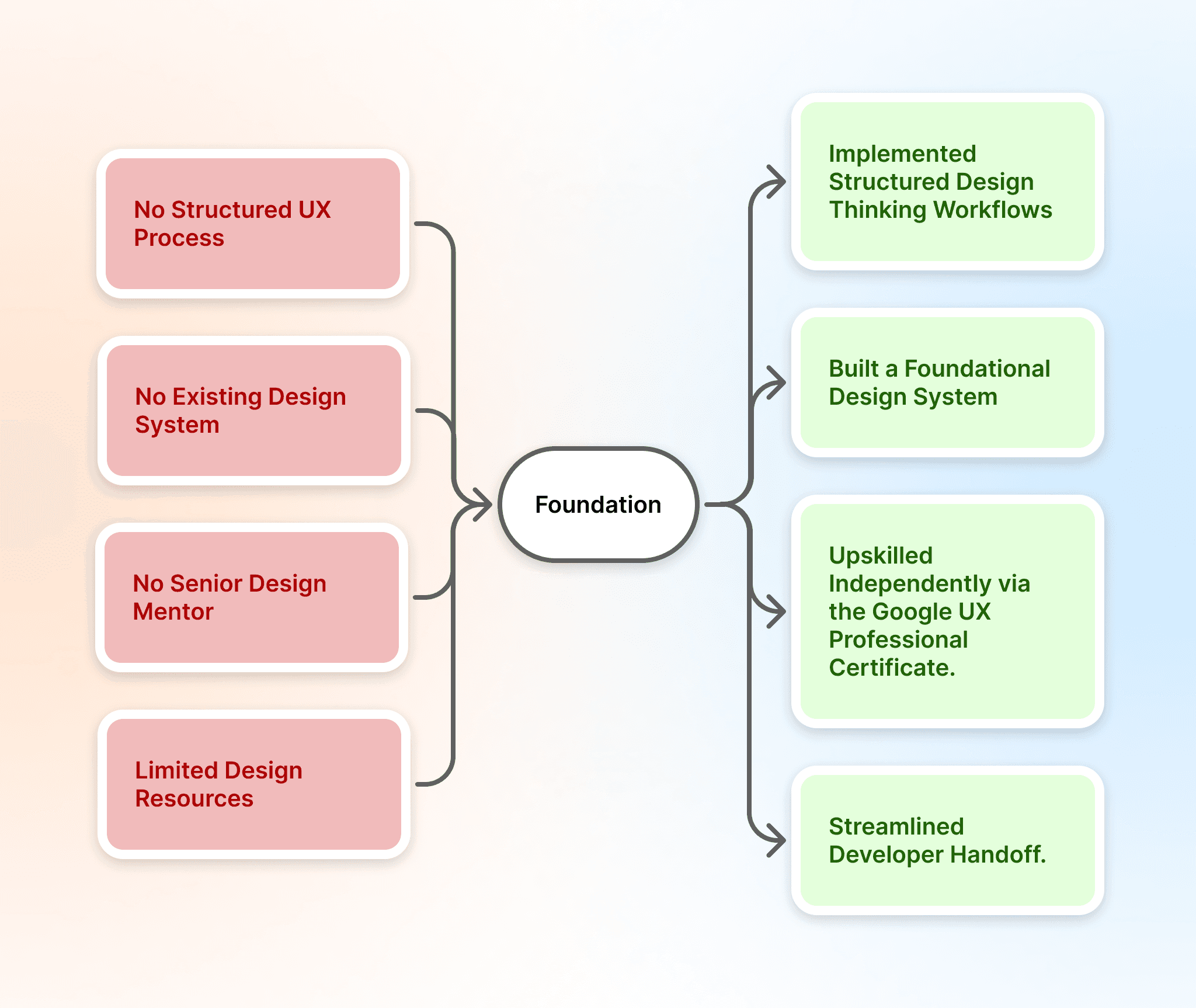
When I joined Hello Mentor, I was stepping into a high-stakes environment with zero established UX infrastructure. The company operates in the NEET counseling space - a field where a single user error can cost a student an entire academic year. Despite the importance of their work, the existing website lacked the digital credibility and structure needed to convert anxious parents and students into leads.
As the Founding UI/UX Designer, I didn't just redesign a website; I established the company’s first UX methodology while operating entirely independently. To ensure my reasoning was rooted in industry standards, I completed the Google UX Professional Certificate concurrently, applying structured design thinking to every phase of the project.
The Task
Redesigning and building the company’s marketing website from scratch.
My Role
Founding UI/UX Designer
UX research
UX process setup
UI design
Design system foundation
Stakeholder collaboration
Hiring and mentoring designers
Working closely with developers
Understanding The Task
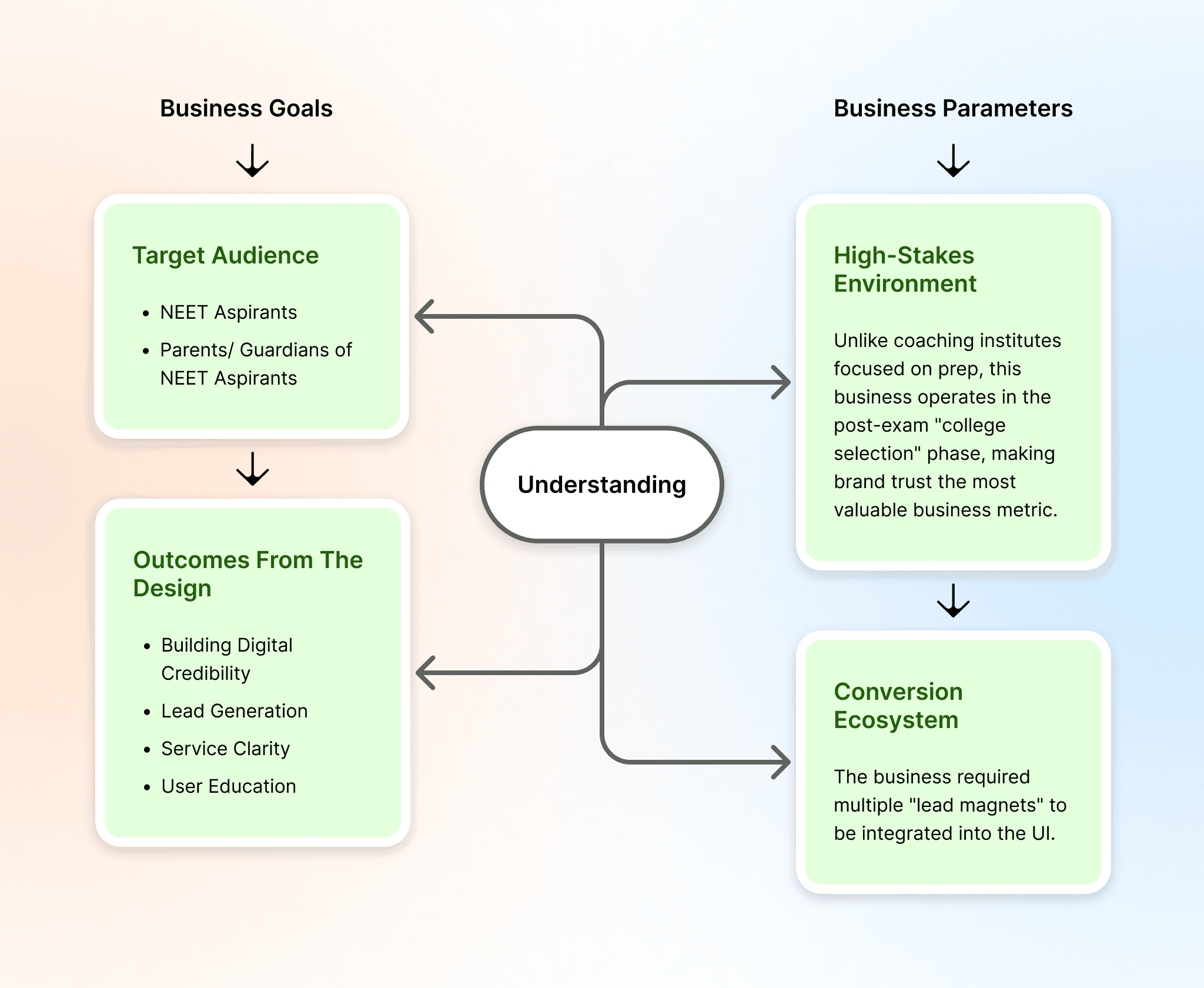
Before the project became more complex, I focused on understanding the business requirements, project scope, and stakeholder expectations. This early alignment helped me identify key priorities, available resources, project timelines, and design constraints, enabling me to make informed design decisions throughout the project.
Product Thinking & UX Reasoning
My strategy began with a deep dive into the "Trust Gap." I realized that for an EdTech service focusing on counseling (not just prep), the UI needed to feel like "complete handholding" rather than a mere sales pitch.
It all started with the Early Challenges
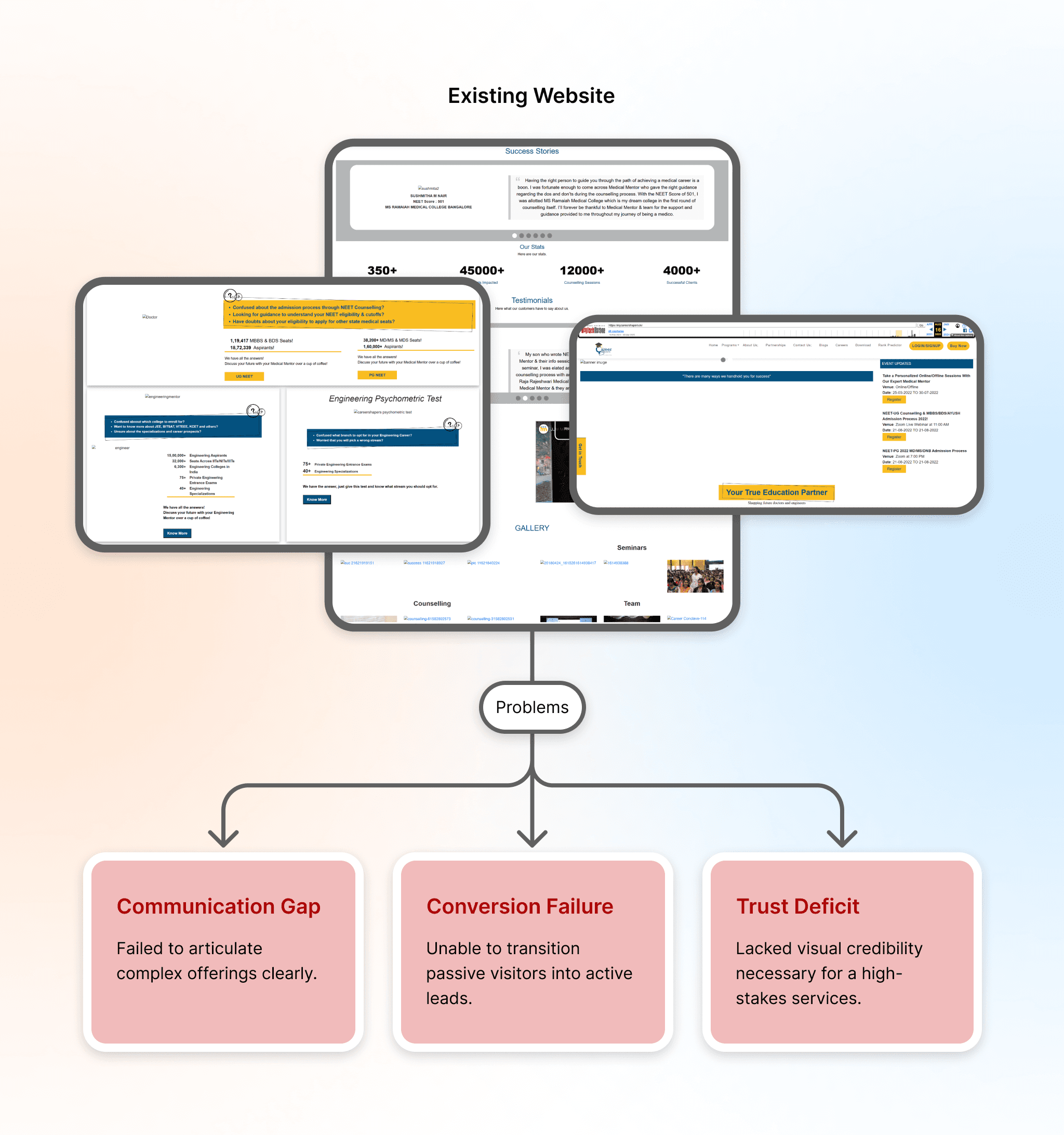
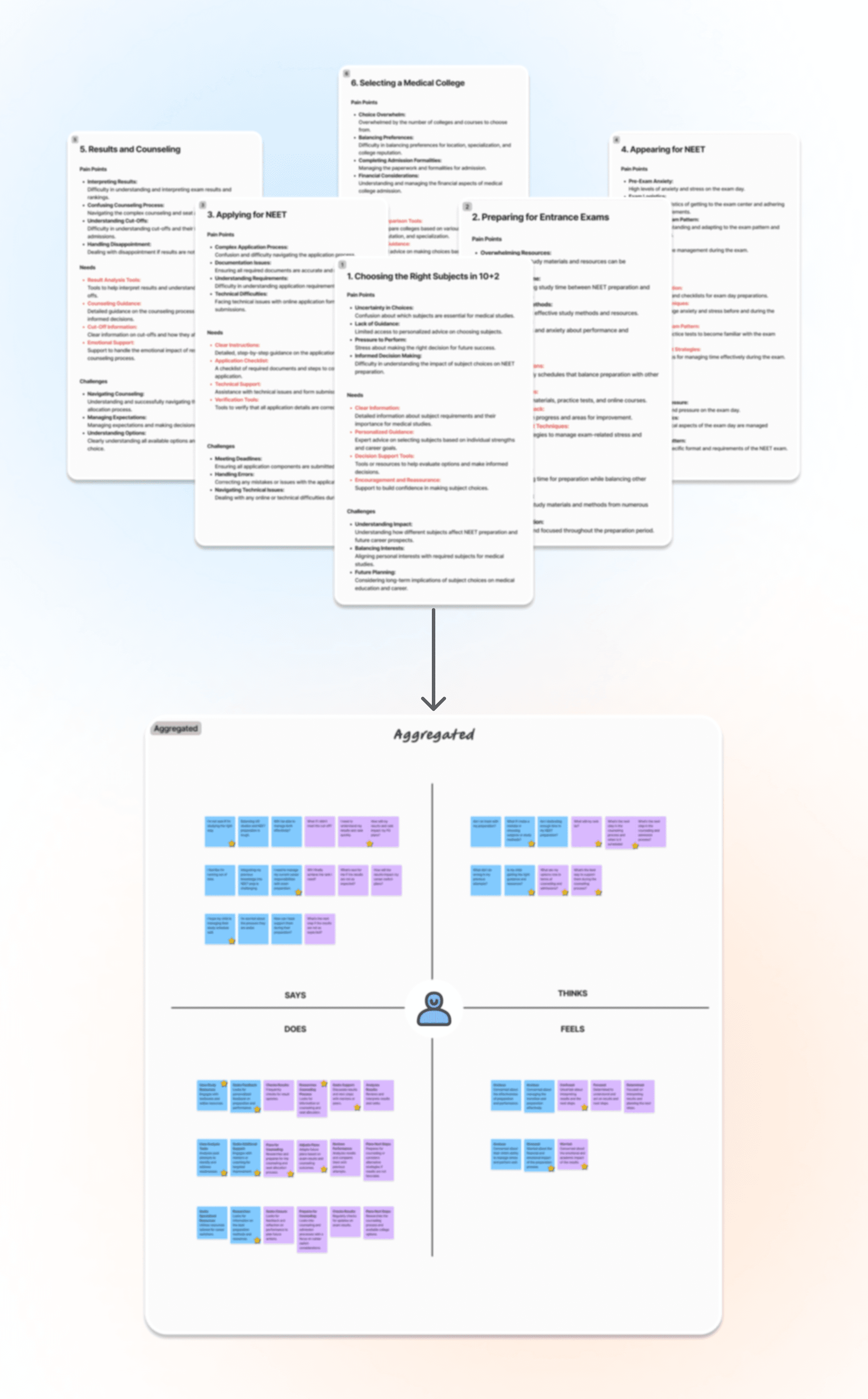
To strengthen the project foundation, I began with UX research, focusing on both foundational and design research. Using secondary research methods, I gathered insights into user behaviors, expectations, and interests to better understand what users would value most in the product experience.
It took time to truly empathize with the target users. After spending a few weeks understanding their journey, I began to recognize the emotional pressure and expectations faced by NEET aspirants and their parents, which helped me design with greater sensitivity and clarity.
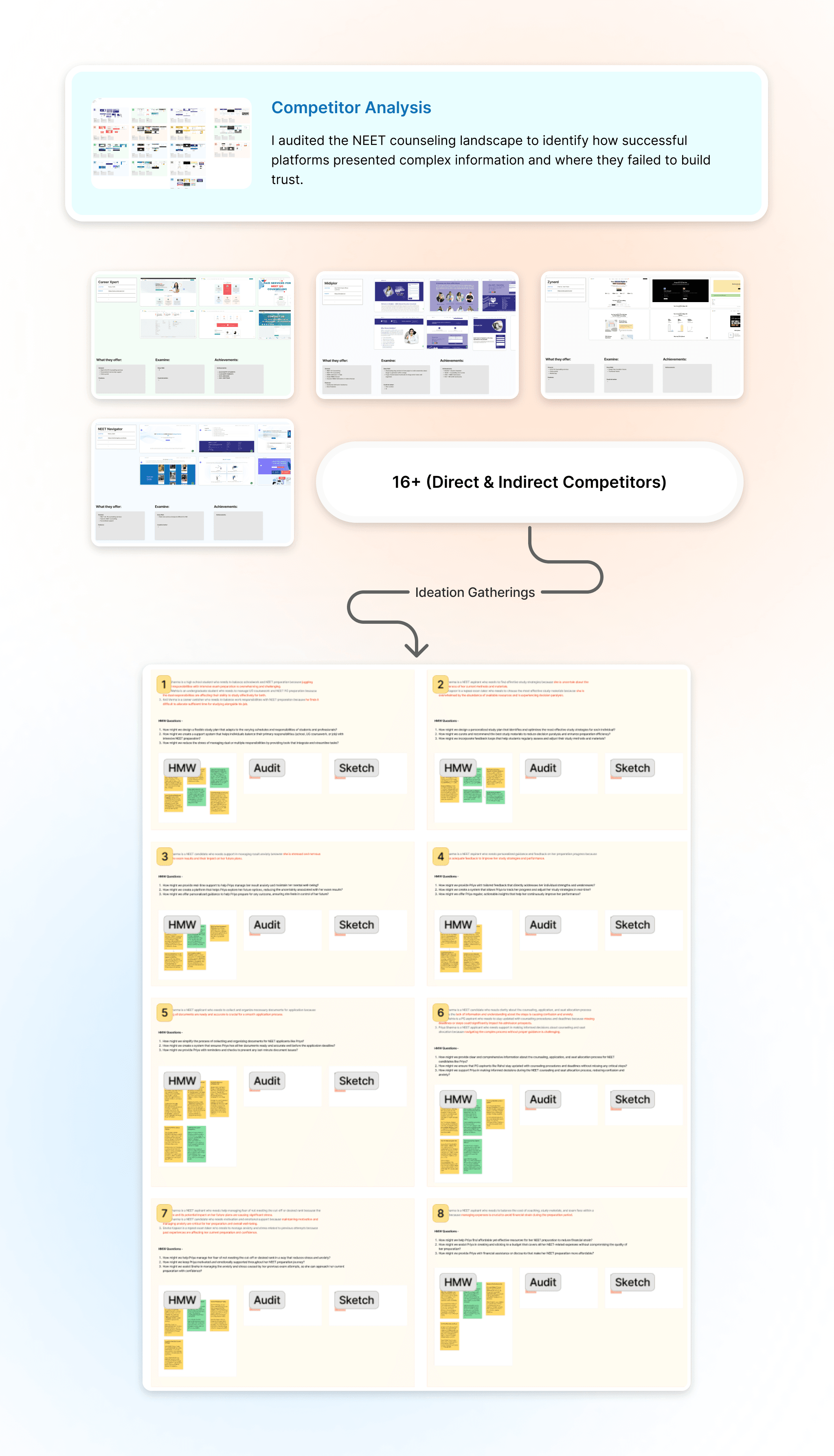
After defining the core problem statements, the next step was idea generation. To explore possible solutions, I conducted a competitive audit - one of the most effective methods for identifying industry patterns, uncovering usability gaps, and understanding how competitors were solving similar problems. This process helped me discover opportunities to improve the overall user experience and differentiate the product.
Once the research and ideation phases were completed, I moved into designing the prototypes. During this stage, we decided to expand the design team by hiring two junior UI/UX designers. I took responsibility for conducting interviews, onboarding, and mentoring them in areas such as website layouts, design structure, Auto Layouts, and Nested Auto Layouts in Figma.
This phase became a valuable learning experience for me as well. I dedicated a few days to helping the team align with the workflow and design standards before we continued collaboratively. As the project progressed, I began working closely with cross-functional teams, stakeholders, and participating in regular discussions and reviews. The overall workflow naturally started reflecting an Agile-like process, giving me practical exposure to collaborative and iterative product development.
UX Reasoning & Content Strategy
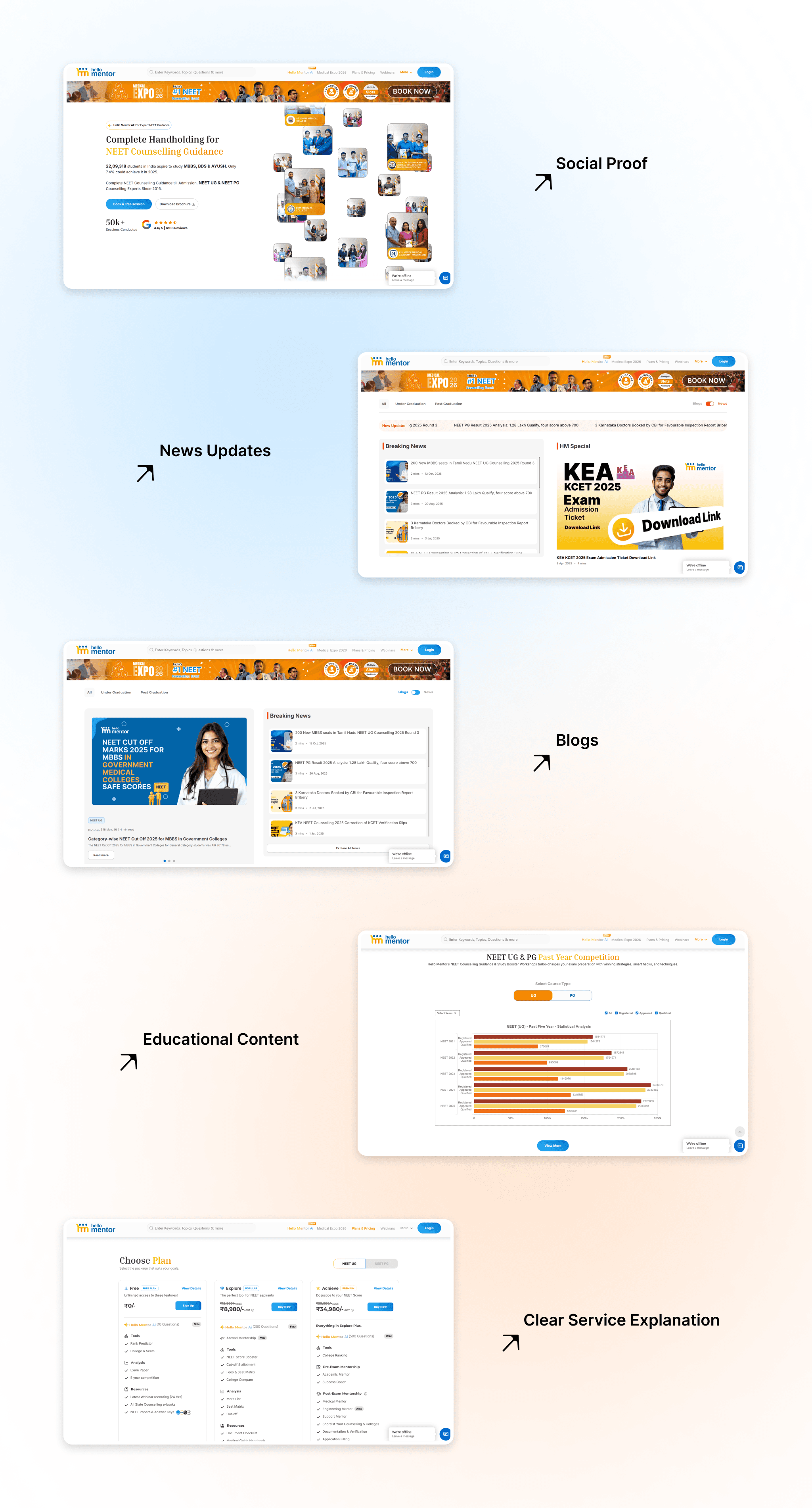
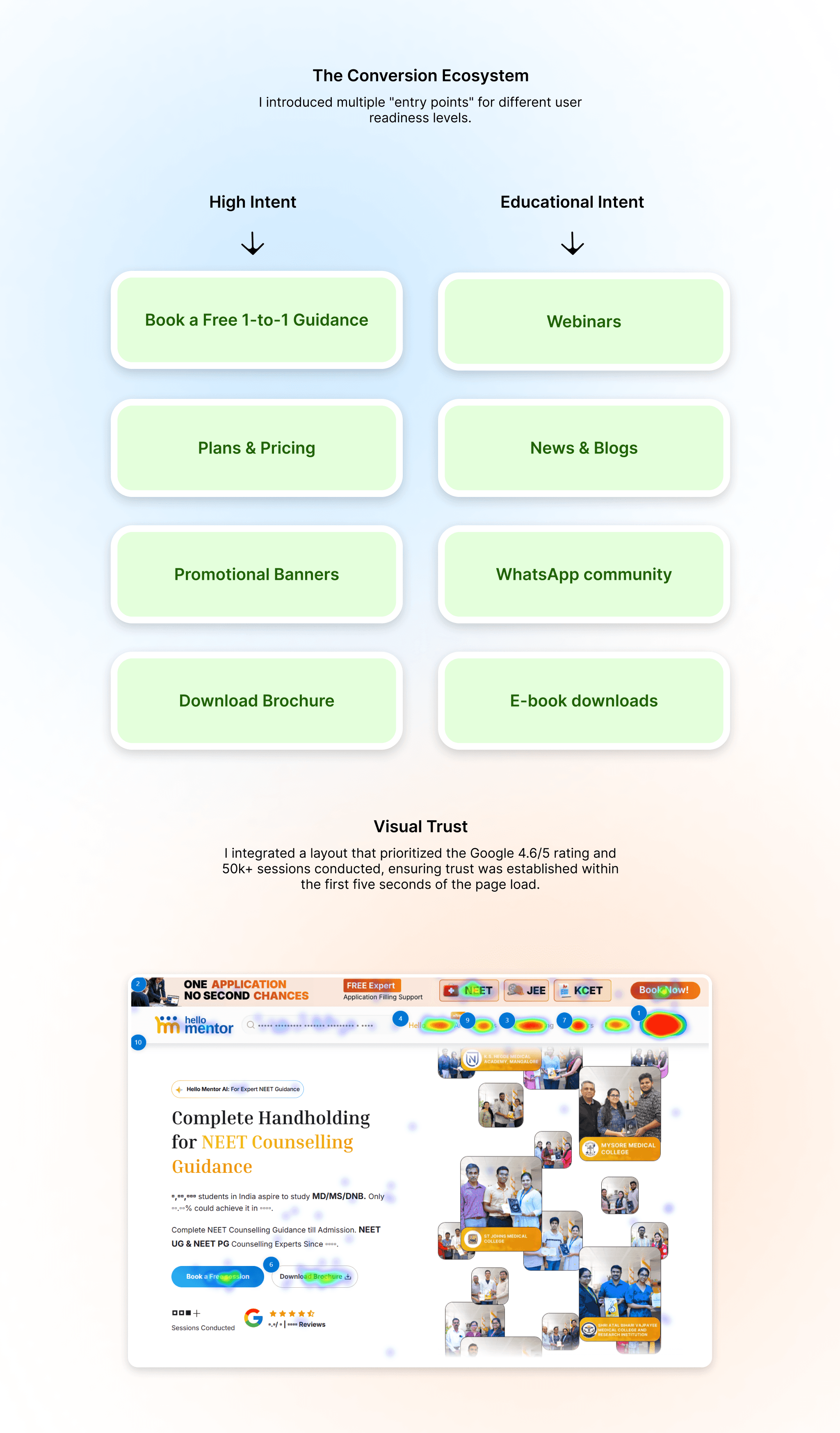
Every design choice was centered on Social Proof and Educational Content. We moved away from generic marketing to a content-rich approach featuring blogs, news updates, and clear service explanations.
To optimize for Lead Generation, we designed the user journey to offer value before asking for a commitment.
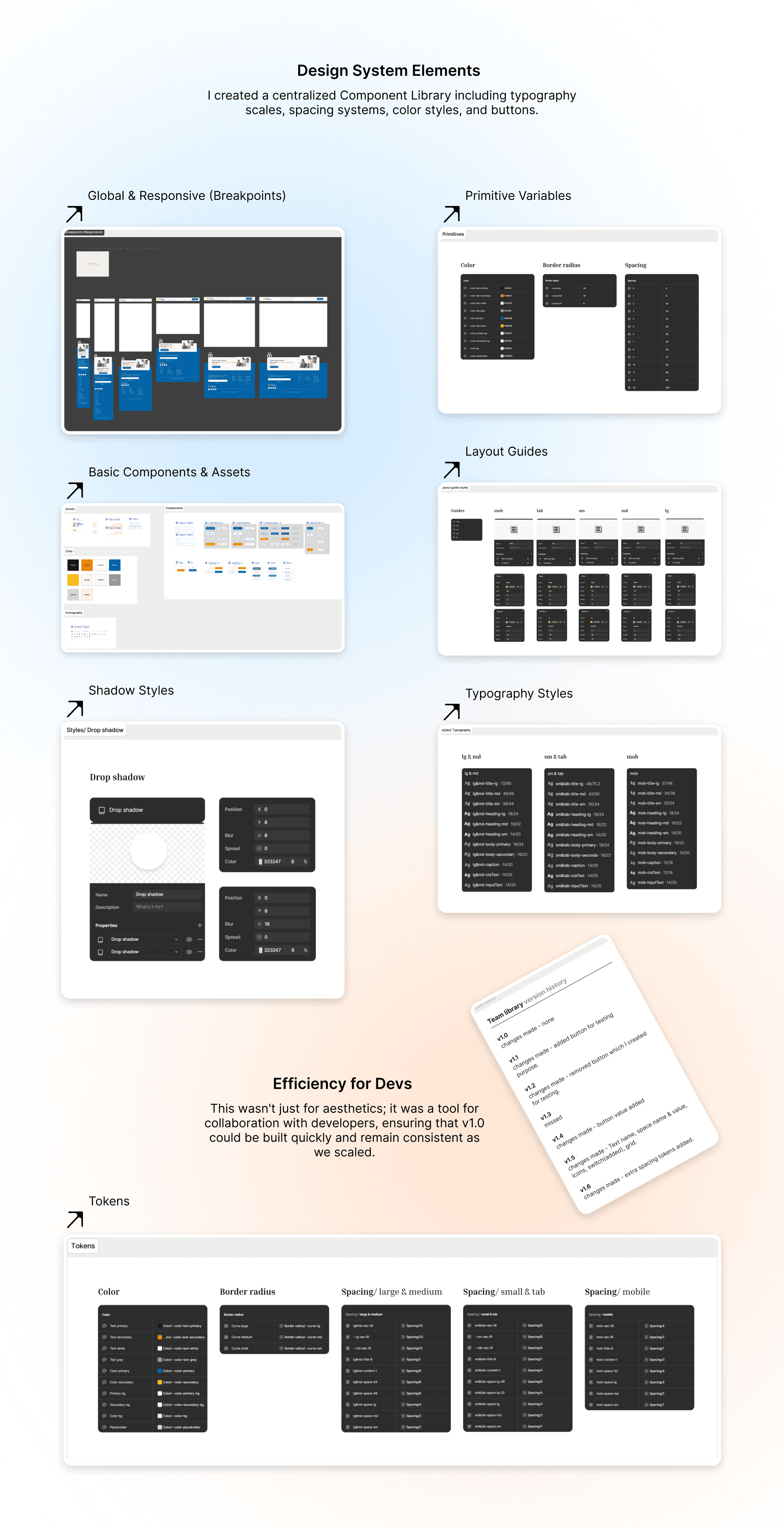
Scaling Through Systems: The Component Library
Handling a project of this scale required forward-thinking technical debt management. Even though stakeholders were initially unfamiliar with the concept, I proactively built a foundational Design System.
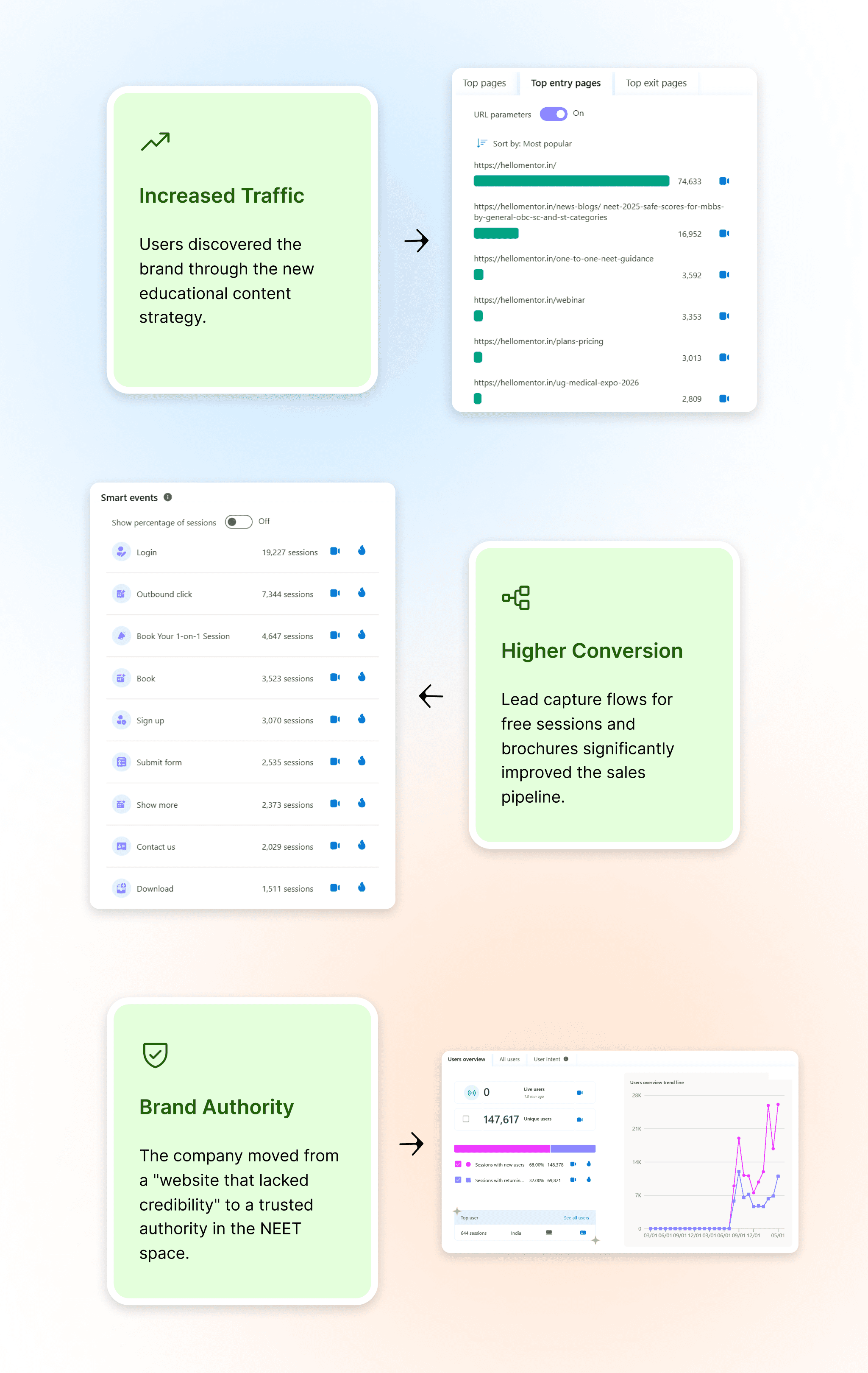
The Impact: Results Driven by Design
The launch of the redesigned website transformed Hello Mentor’s digital presence.
To better understand user behavior and track website performance, I integrated tools such as Microsoft Clarity and Google Analytics into the platform. Microsoft Clarity provided valuable insights into how users were actually interacting with the website compared to our initial assumptions and hypotheses. These behavioral insights helped us identify friction points, refine user flows, and make more informed design decisions throughout the product development process.
Key Learnings
Designing without senior guidance improved my problem-solving ability
Building a UX foundation inside a startup requires strong stakeholder communication
Even a basic design system significantly improves team efficiency