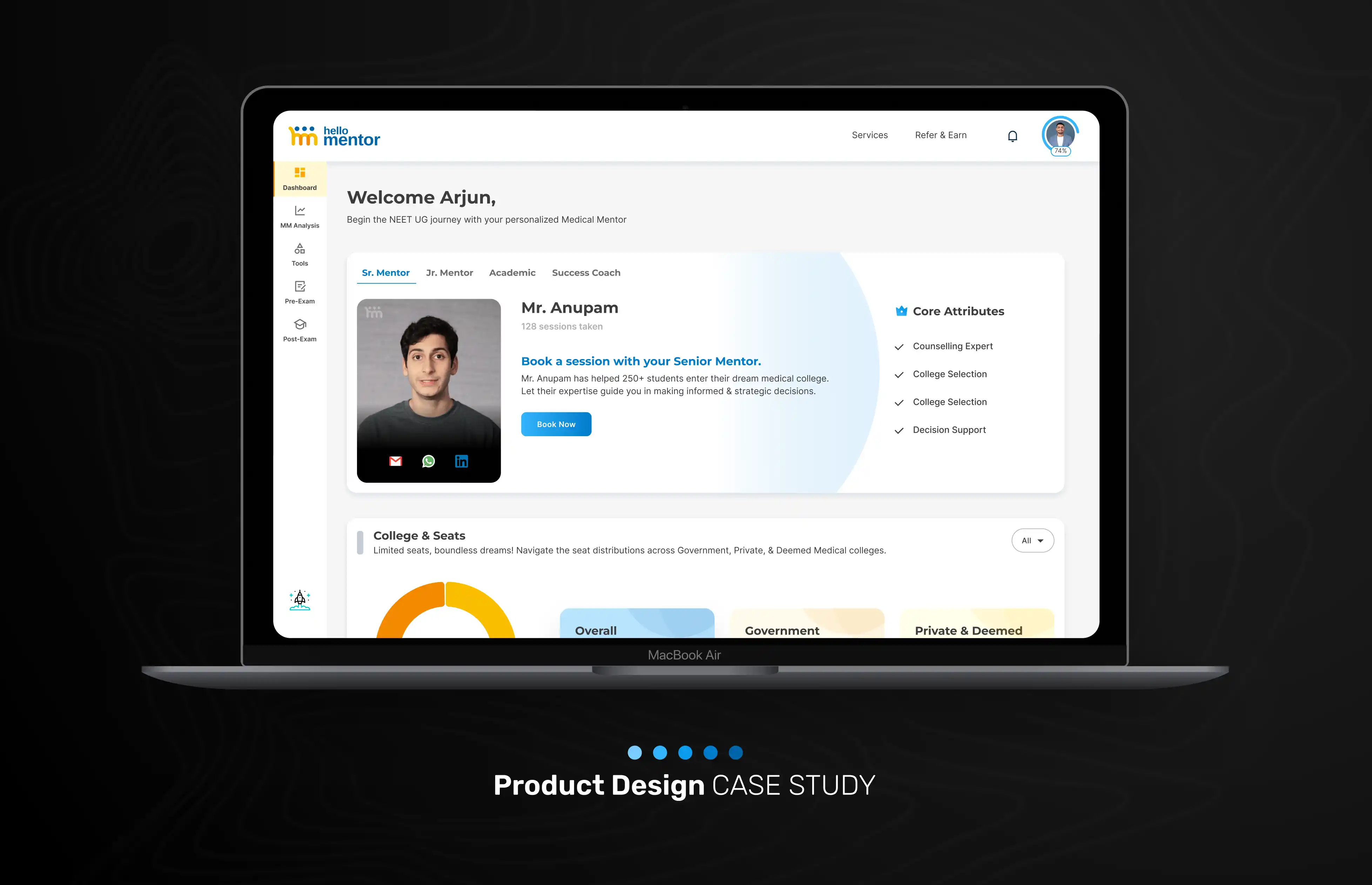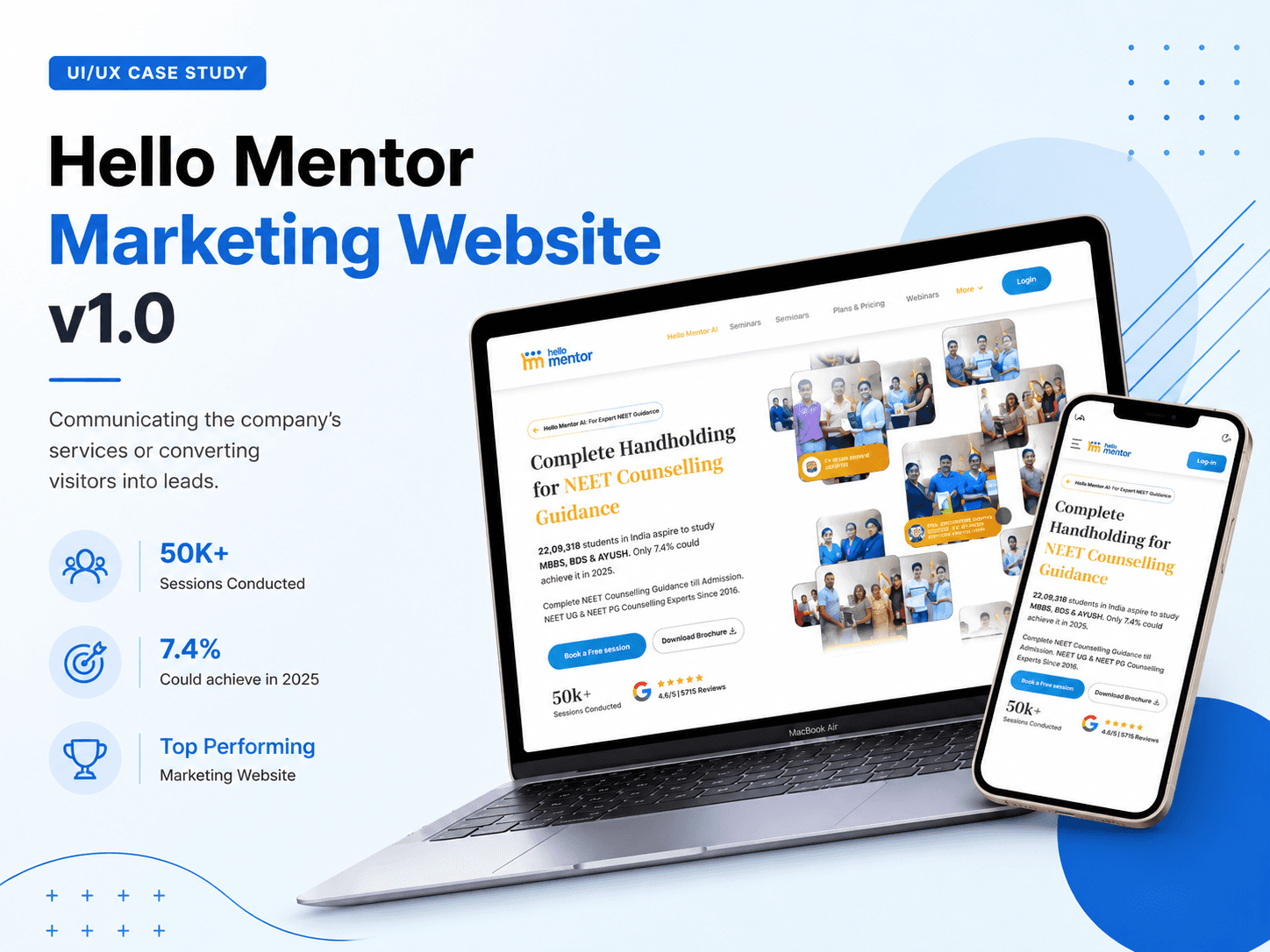
Overview
As the Founding Designer, my first responsibility was to redesign and build the company’s marketing website from scratch.
This project also became the starting point of establishing UX practices inside the company.
Company Context
Hello Mentor helps NEET aspirants and their parents navigate the complex NEET counselling process.
Unlike coaching institutes that focus on exam preparation, Hello Mentor focuses on guiding students through the counselling and college selection process, where even a small mistake can result in losing an entire academic year.
Therefore, building trust and credibility was critical.
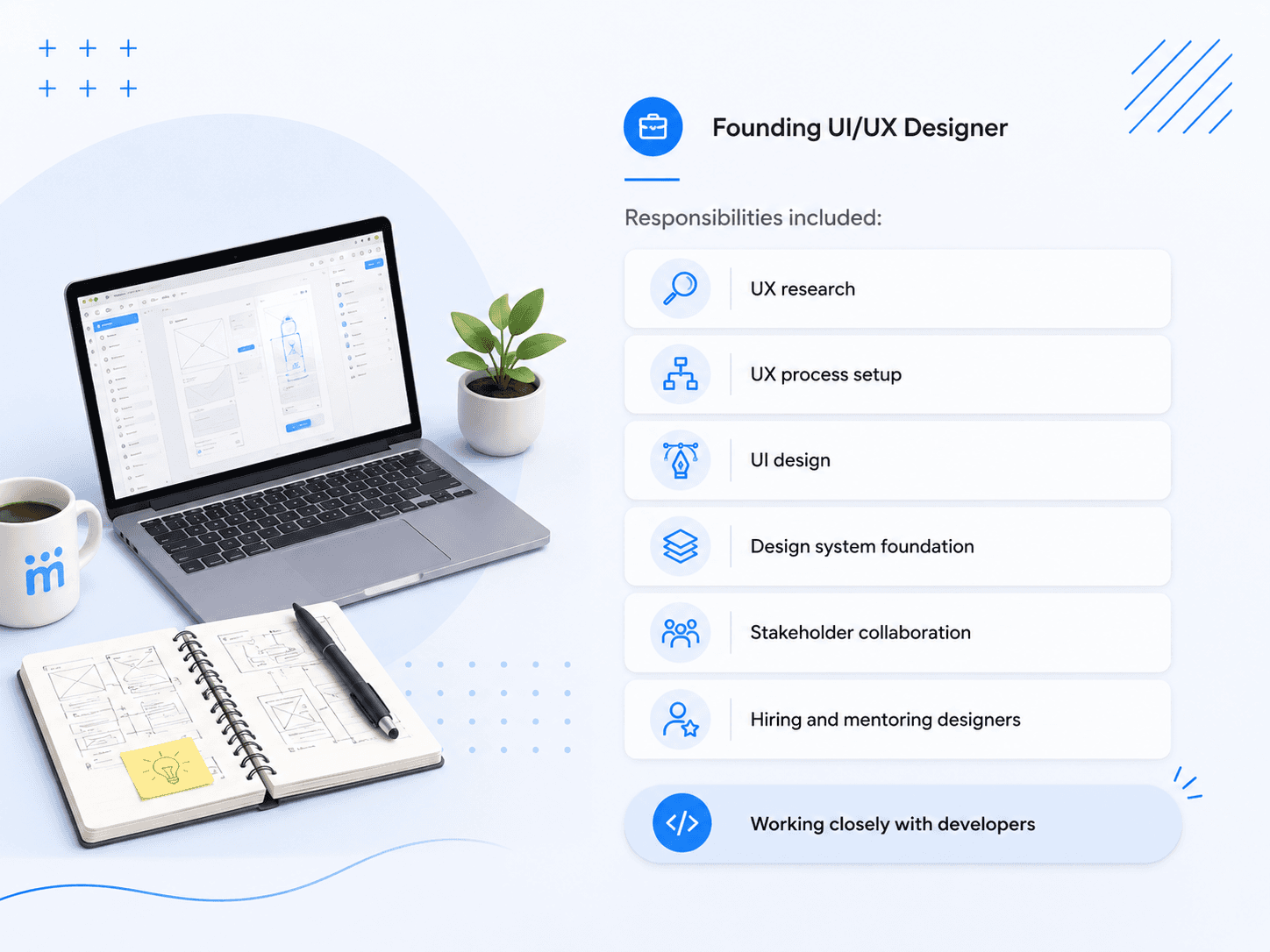
My Role
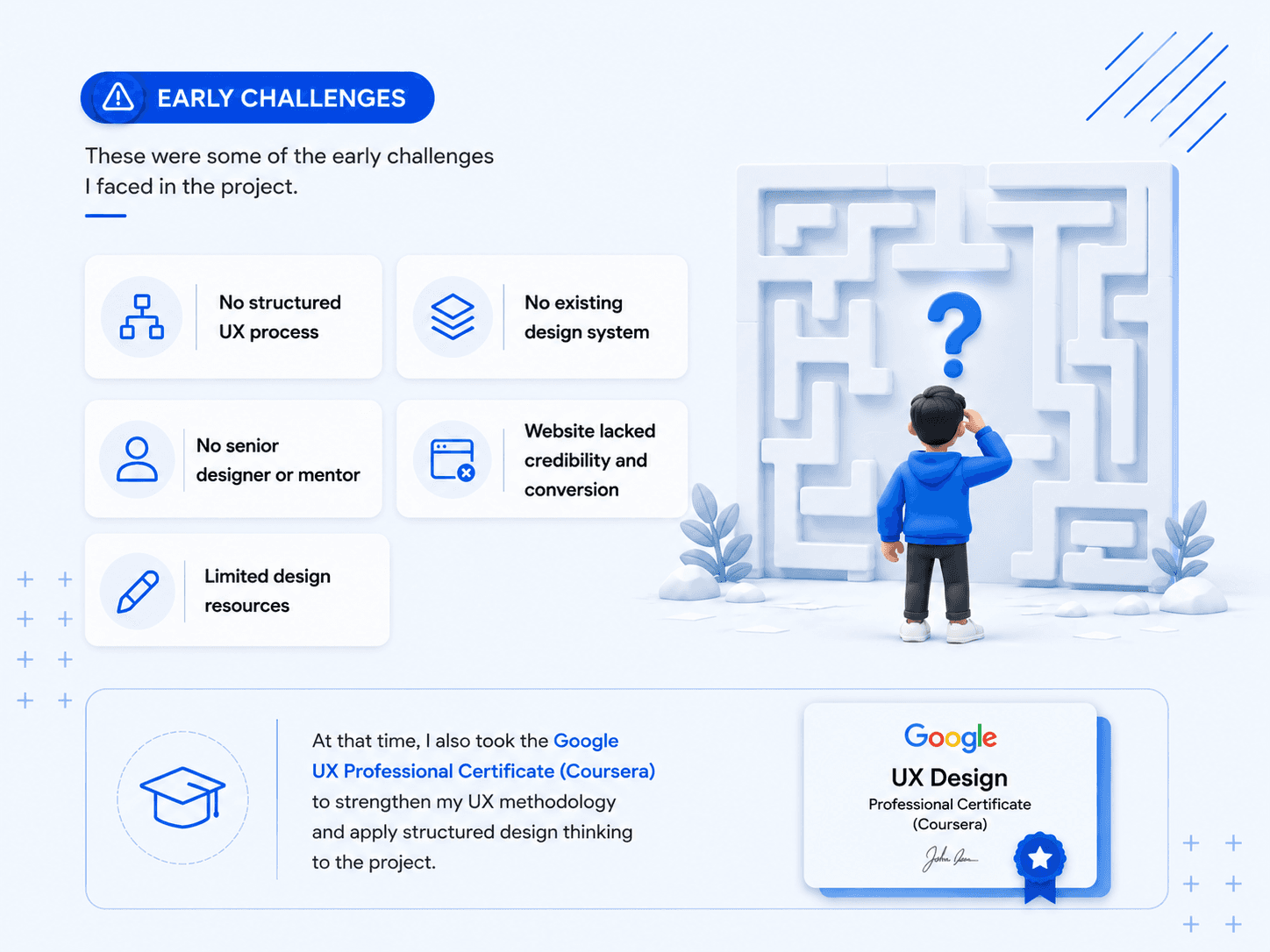
Challenges
Process
1. Competitor Analysis
I analyzed competitor websites in the NEET counselling and education guidance space to understand:
How they present services
Trust-building strategies
Information hierarchy
Conversion patterns
This helped identify gaps and opportunities.
2. Business & User Goals
I worked closely with stakeholders to define:
Business Goals:
Generate leads
Build credibility
Clearly explain services
Educate users about NEET counselling
User Goals:
Understand counselling steps
Avoid mistakes during counselling
Get reliable guidance
Evaluate whether Hello Mentor can help them
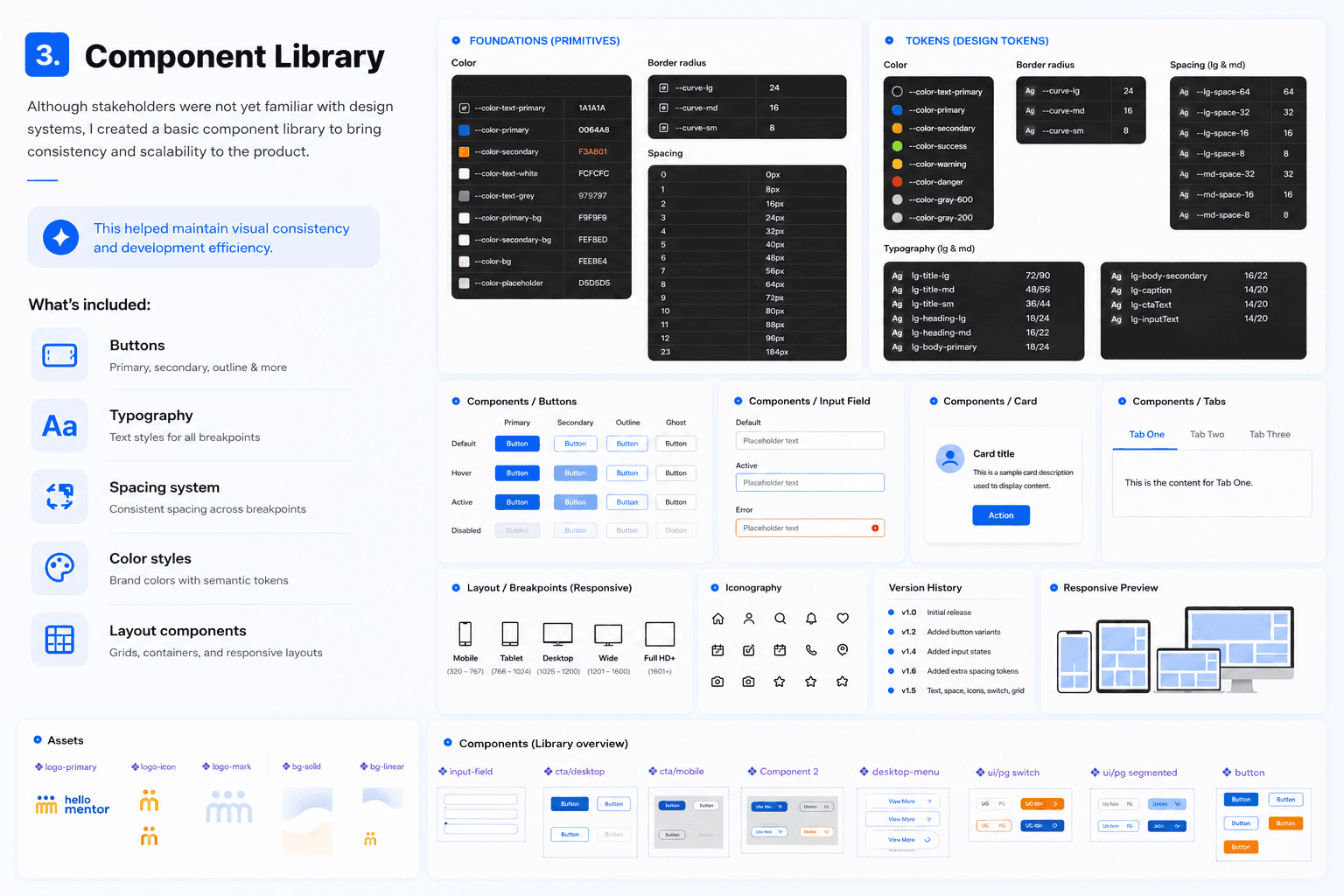
3. Component Library
Although stakeholders were not yet familiar with design systems, I created a basic component library including:
Buttons
Typography
Spacing system
Color styles
Layout components
This helped maintain visual consistency and development efficiency.
4. Scaling the Design Team
As the project grew, I realized the workload required more designers.
I worked with stakeholders to:
Define hiring requirements
Conduct design interviews
Hire two designers
The design team then grew to three members, where I guided them on:
UX process
UI consistency
Developer-friendly design
Design collaboration
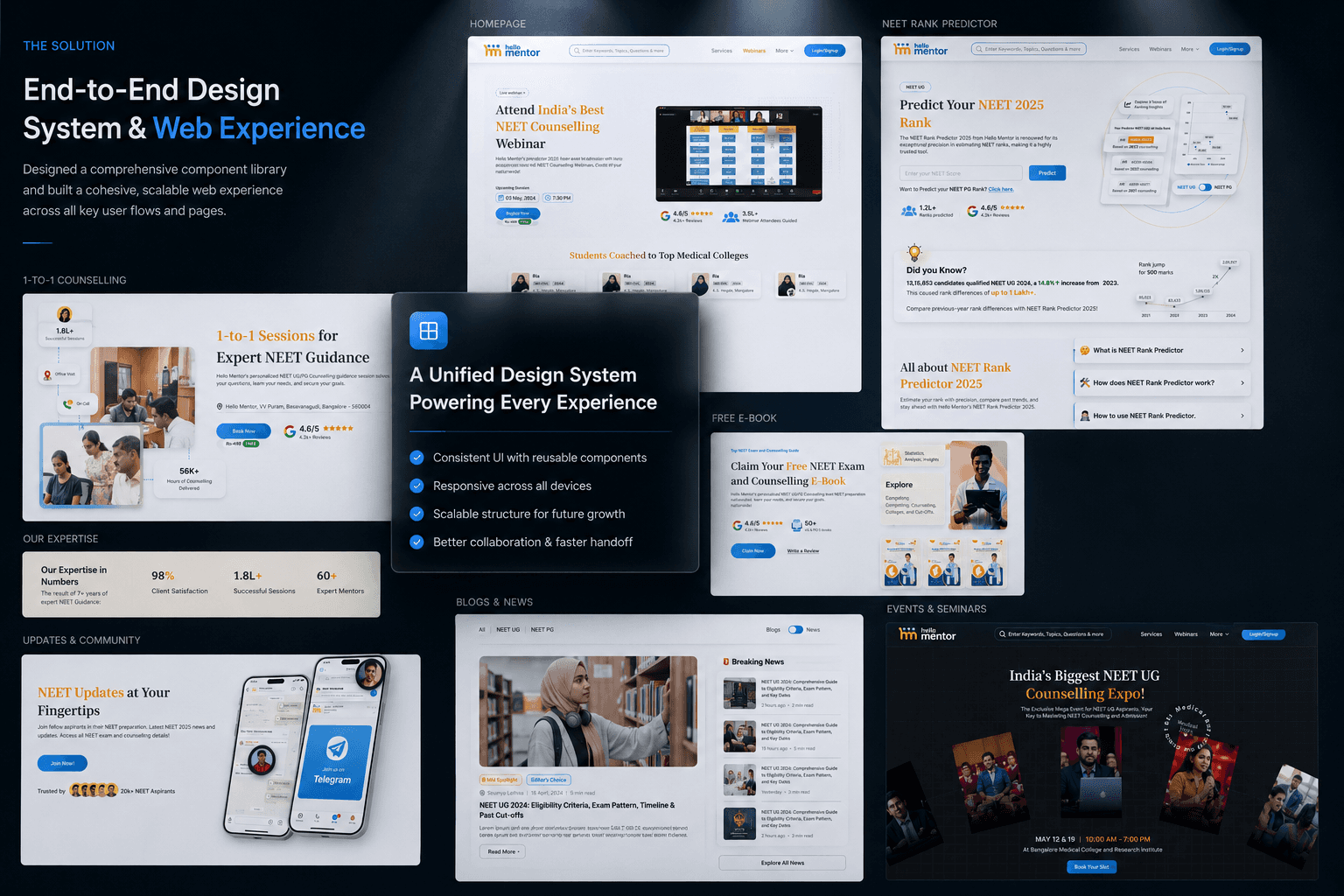
Solution
We designed and launched a new marketing website focused on:
Trust-building
Clear service explanation
Educational content
Lead generation
Key elements included:
Service explanation pages
Content and blogs
Clear value proposition
Improved visual credibility
Lead capture flows
Impact
After launch:
Website traffic increased
Users started discovering Hello Mentor through content
Lead generation improved
The company gained stronger digital credibility
This project also established the first design culture inside the company.
Key Learnings
Designing without senior guidance improved my problem-solving ability
Building a UX foundation inside a startup requires strong stakeholder communication
Even a basic design system significantly improves team efficiency